





Publications Overview
Research, scholarship and dialogue on Indic knowledge systems and civilizational thought.
Publications Overview
Research, scholarship and dialogue on Indic knowledge systems and civilizational thought.
Snakes in the Ganga
Snakes in the Ganga unveils uncomfortable truths concerning India's vulnerabilities
View Details →
Snakes in the Ganga
Snakes in the Ganga unveils uncomfortable truths concerning India's vulnerabilities...
All Publications
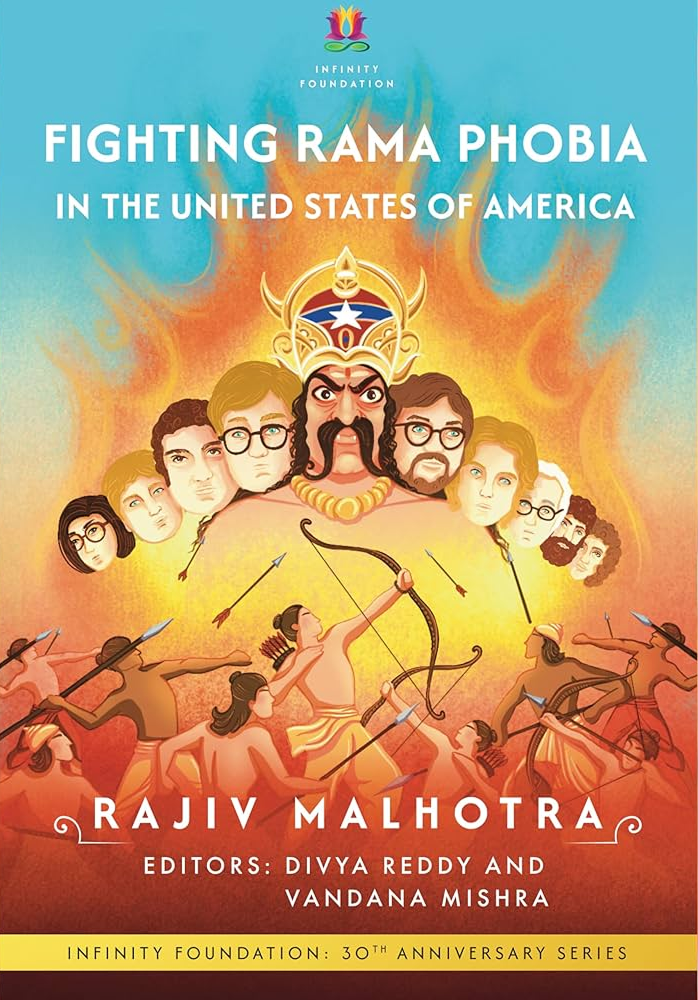
Ten Heads of Ravana
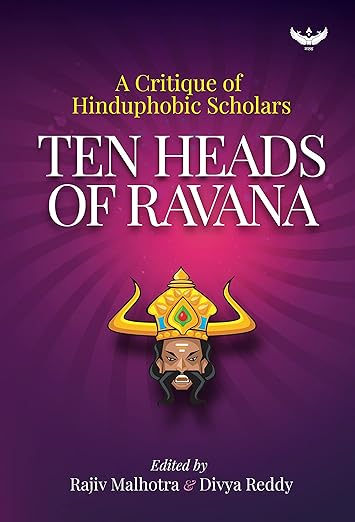
Free Delivery 10 days Replacement Amazon Delivered Secure transaction For long, a handful of scholars and intellectual sites, whose understanding of Bhārata is disjointed from tradition and often inimical to the Dhārmic way of life, have controlled India’s civilizational narrative. They analyze Bhāratīya sanskriti through a Western gaze while discarding native models. Embedded in powerful ecosystems, gilded Lankas, they are increasingly replacing traditional guru-s and ācārya-s as the modern adhikāri-s of Indian knowledge systems. In contemporary Indian scholarship, eminent personalities like Romila Thapar, Irfan Habib, Shashi Tharoor, Ramachandra Guha, Sheldon Pollock, Wendy Doniger, Devdutt Pattanaik, Kancha Ilaiah, and Michael Witzel are at the forefront of such India studies. Ravana was a scholar par excellence, but he was on the wrong side of Dharma. Hence, Śrīrāma waged a war against him to prevent a breakdown of society. Similarly, today’s embodiments of the historical Ravana—academically influential personalities, but grossly mischaracterizing the Dhārmic way of life and history of Bhārata. In this collection of essays, authors Dr. K.S. Kannan, T.N. Sudarshan, Dr. Sharda Narayanan, Anurag Sharma, Divya Reddy, Manogna Sastry, Subhodeep Mukhopadhyay and Dr. H.R. Meera have brought to light, through rigorous evidence-based research, numerous factual inaccuracies, wilful misrepresentation and deliberate distortions in the scholarship of many such intellectual heads of the modern Ravana.
View Details →
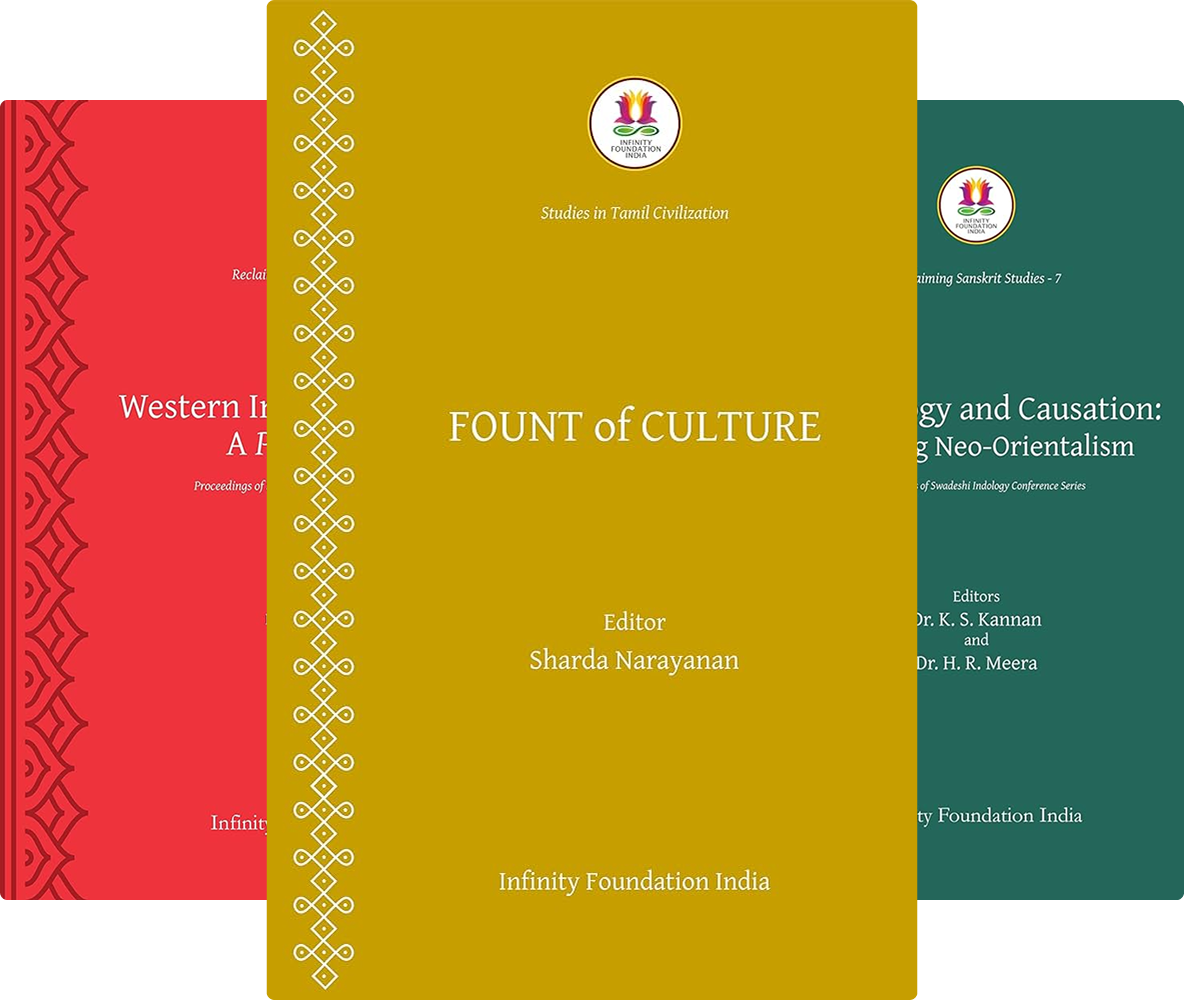
Chronology and Causation: Negating Neo-Orientalism
This volume, being the seventh in the Proceedings of the Swadeshi Indology Conference Series, comprises ten chapters written by different authors. The first two papers deal with issues of chronology in Prof. Sheldon Pollock’s writings, bringing out the lapses and deficiencies in his approach and analysis. The next four deal with Hinduism and Buddhism in their various aspects, and on Pollock’s comments on their relation. The final four papers deal with the issues - of Sanskrit Cosmopolis, of Nazism, of Rasa theory, and of casteism and population genetics.
Fount of Culture: Studies in Tamil Civilization
This book is the second in a series, Studies in Tamil Civilization, which showcases a number of papers presented at the Swadeshi Indology Conference - 3 held at IIT Madras in December 2017, the theme being pan-Indian cultural heritage with special reference to Tamil Nadu and the harmony between Sanskrit and Tamil for the past three millennia at least.The papers presented in this volume intend to equip liberal-minded and progressive people with correct information, so they are not swayed by conflicts and controversies that add to social disharmony spawned by vested interests. The first two papers are in Tamil and the rest in English.
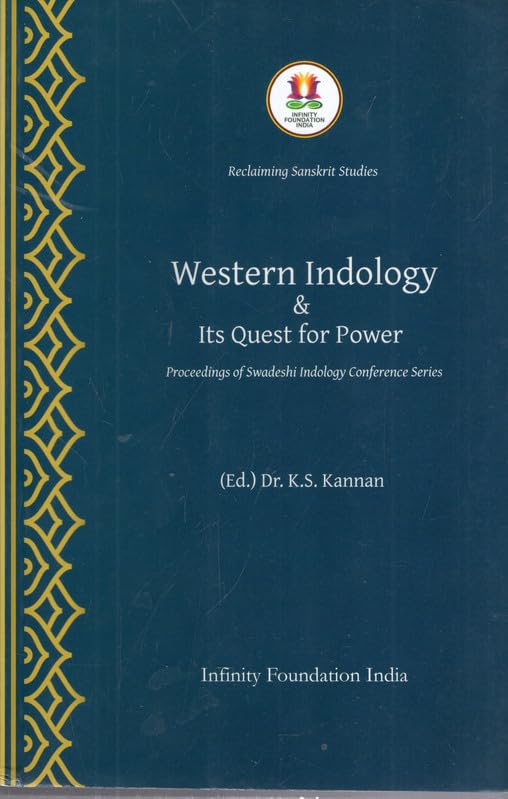
Western Indology on Rasa: A Pūrvapakṣa
This volume, being the fourth in the Proceedings of the Swadeshi Indology Conference Series, comprises seven chapters, each being a paper by a separate author. This volume addresses the issue of misinterpretations and misrepresentations commonly found in Western Indology. An analysis of western Indology reveals an ignorance of the Hindu ethos, of complementary bodies of knowledge, basic semantics involving unitary words, compound-words and phrases/sentences, failing even to spot puns that are essential to the appreciation of the text. The Western approach involves the mapping of good elements of Indian arts onto the Greek ethos and summarily rejecting the rest of the Rasa Theory propounded in the Alaṅkāra-śāstra as irrelevant to the current times. This volume shows the relevance and claims that it still has much to contribute toward many issues in modern psychology and poetics. There are seven chapters, each being a paper by a separate author.
View Details →
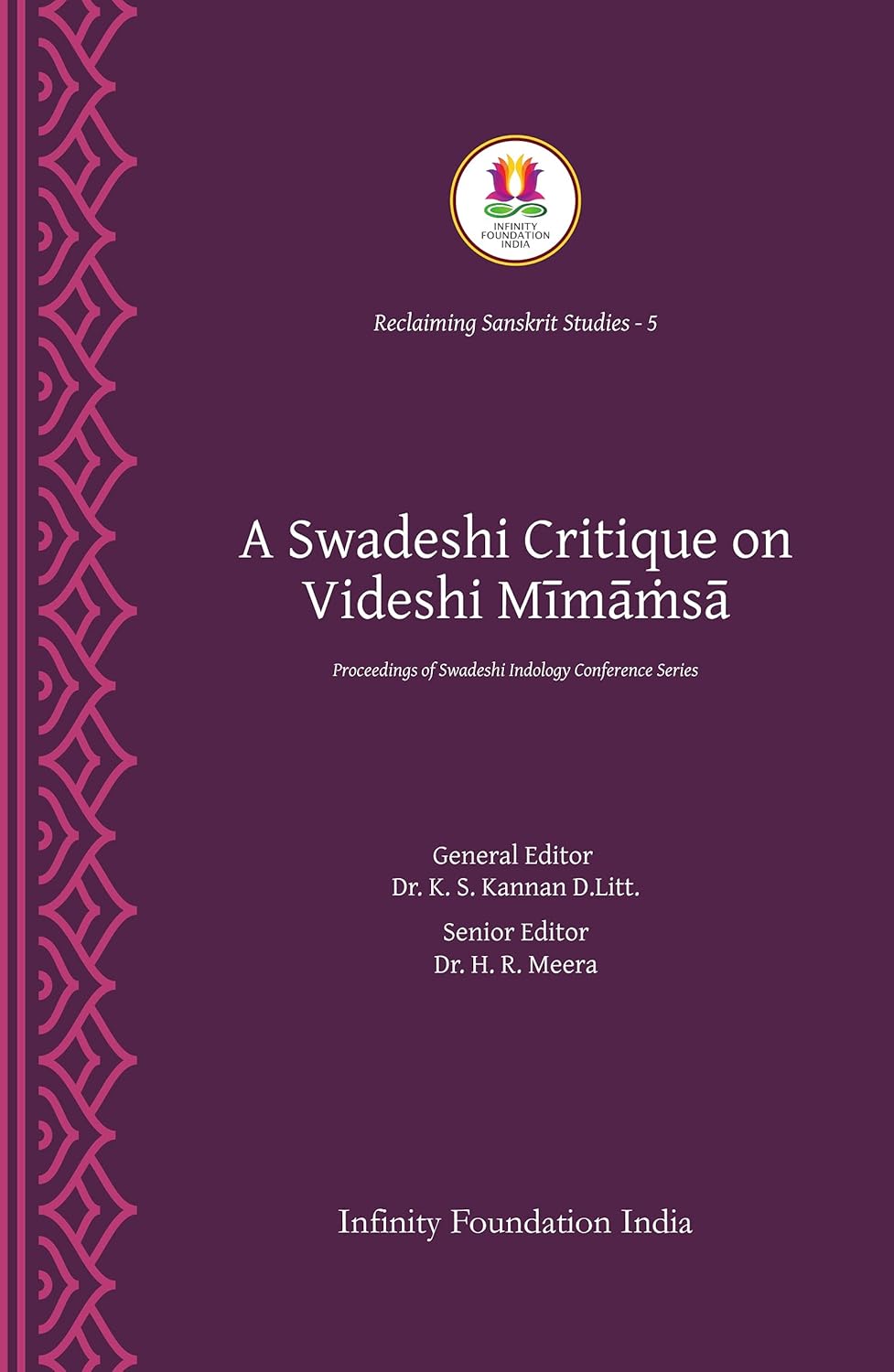
Swadeshi Critique of Videshi Mīmāṁsā
This volume, being the seventh in the Proceedings of the Swadeshi Indology Conference Series, comprises ten chapters written by different authors. The first two papers deal with issues of chronology in Prof. Sheldon Pollock’s writings, bringing out the lapses and deficiencies in his approach and analysis. The next four deal with Hinduism and Buddhism in their various aspects, and on Pollock’s comments on their relation. The final four papers deal with the issues - of Sanskrit Cosmopolis, of Nazism, of Rasa theory, and of casteism and population genetics.
Proceedings of the Swadeshi Indology Conference Series (Series Page)
Infinity Foundation (IF), USA, has more than two decades track record of mapping the Kurukshetra in the field of Indology, and producing game changing original research using the Indian lens to study India and the world. One of the goals of Infinity Foundation India (IFI), an offspring of IF, in organizing Swadeshi Indology Conference Series is to produce scholarship to methodically respond to the Western worldview of Indology.
Being Different
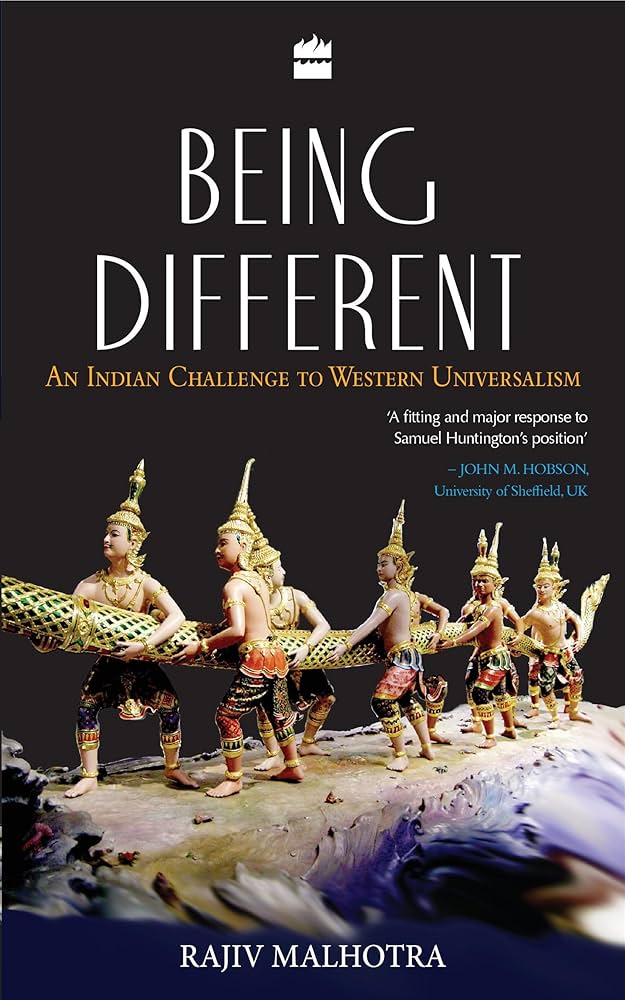
India is more than a nation state. It is also a unique civilization with philosophies and cosmologies that are markedly distinct from the dominant culture of our times - the West. India’s spiritual traditions spring from dharma which has no exact equivalent in Western frameworks. Unfortunately, in the rush to celebrate the growing popularity of India on the world stage, its civilizational matrix is being co-opted into Western universalism, thereby diluting its distinctiveness and potential. In Being Different: An Indian Challenge to Western Universalism, thinker and philosopher Rajiv Malhotra addresses the challenge of a direct and honest engagement on differences, by reversing the gaze, repositioning India from being the observed to the observer and looking at the West from the dharmic point of view. In doing so, he challenges many hitherto unexamined beliefs that both sides hold about themselves and each other. He highlights that while unique historical revelations are the basis for Western religions, dharma emphasizes self-realization in the body here and now. He also points out the integral unity that underpins dharma’s metaphysics and contrasts this with Western thought and history as a synthetic unity. Erudite and engaging, Being Different critiques fashionable reductive translations and analyses the West’s anxiety over difference and fixation for order which contrast the creative role of chaos in dharma. It concludes with a rebuttal of Western claims of universalism, while recommending a multi-cultural worldview.
View Details →
Breaking India
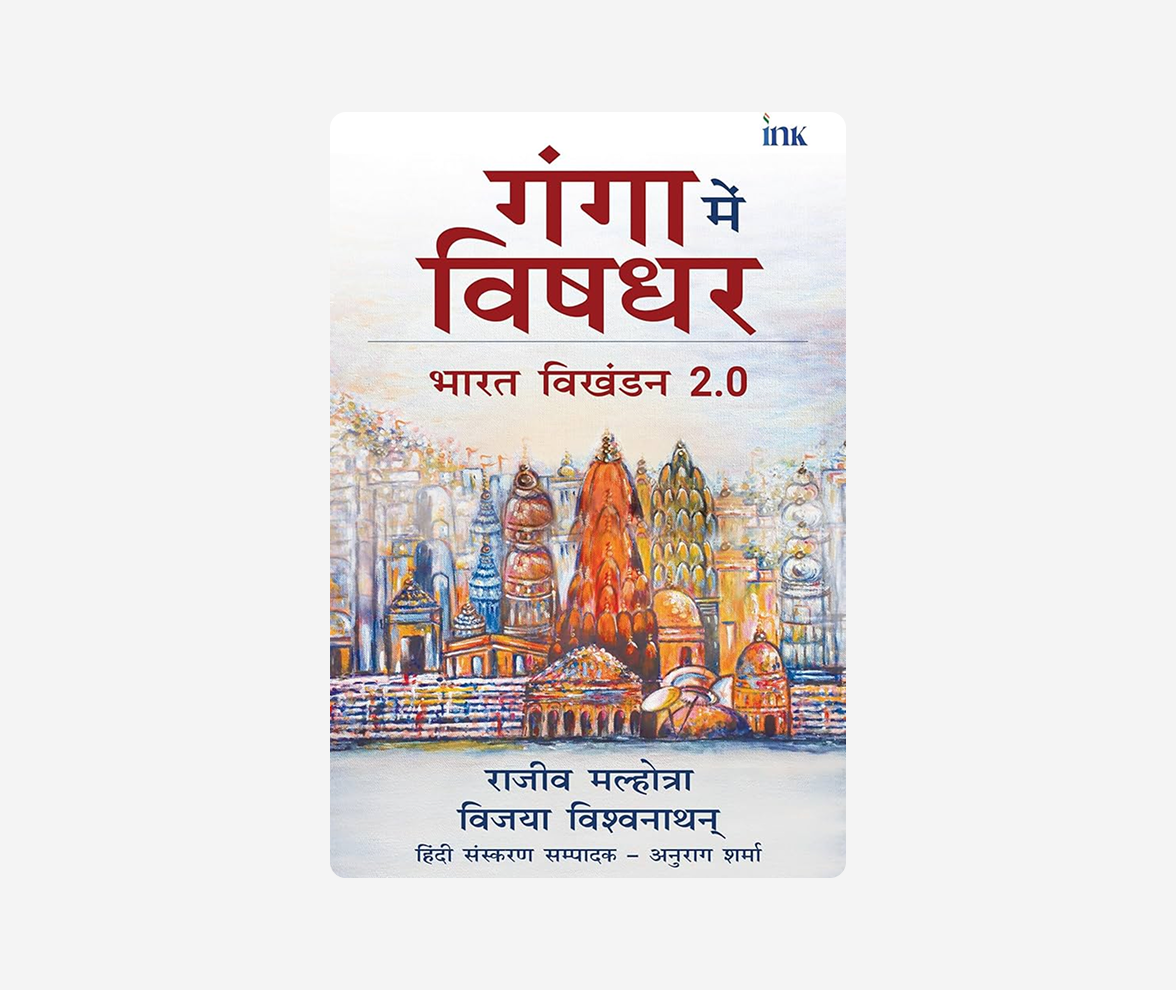
Bharat Vikhandan is a book that speaks in favour of the latent potential within India and its diverse culture. It argues that the country's integrity is being diluted by three prominent Western cultures and discusses the resulting effects of the process.This book examines the origins of the famous Dravidian movement that shaped the vast culture of our nation, while also focusing on the Dalit Identity and its current situation. It has been also noted that the book predominantly concentrates on the subordination, surveillance and subversion of Independent India.Bharat Vikhandan makes for a powerful read while closely observing the changing trends in modern India and questioning the reasons behind its growth and eventual dilution. It makes for an eye-opener and is a wakeup call to the nation as whole, forcing to rethink our priorities and allegiances. It has been praised for its historiographical and confrontational content while refusing to shy away from hard truths that need to be discussed. This book was published by Harper Hindi in 2014 and is available in paperback.
who is raising your children
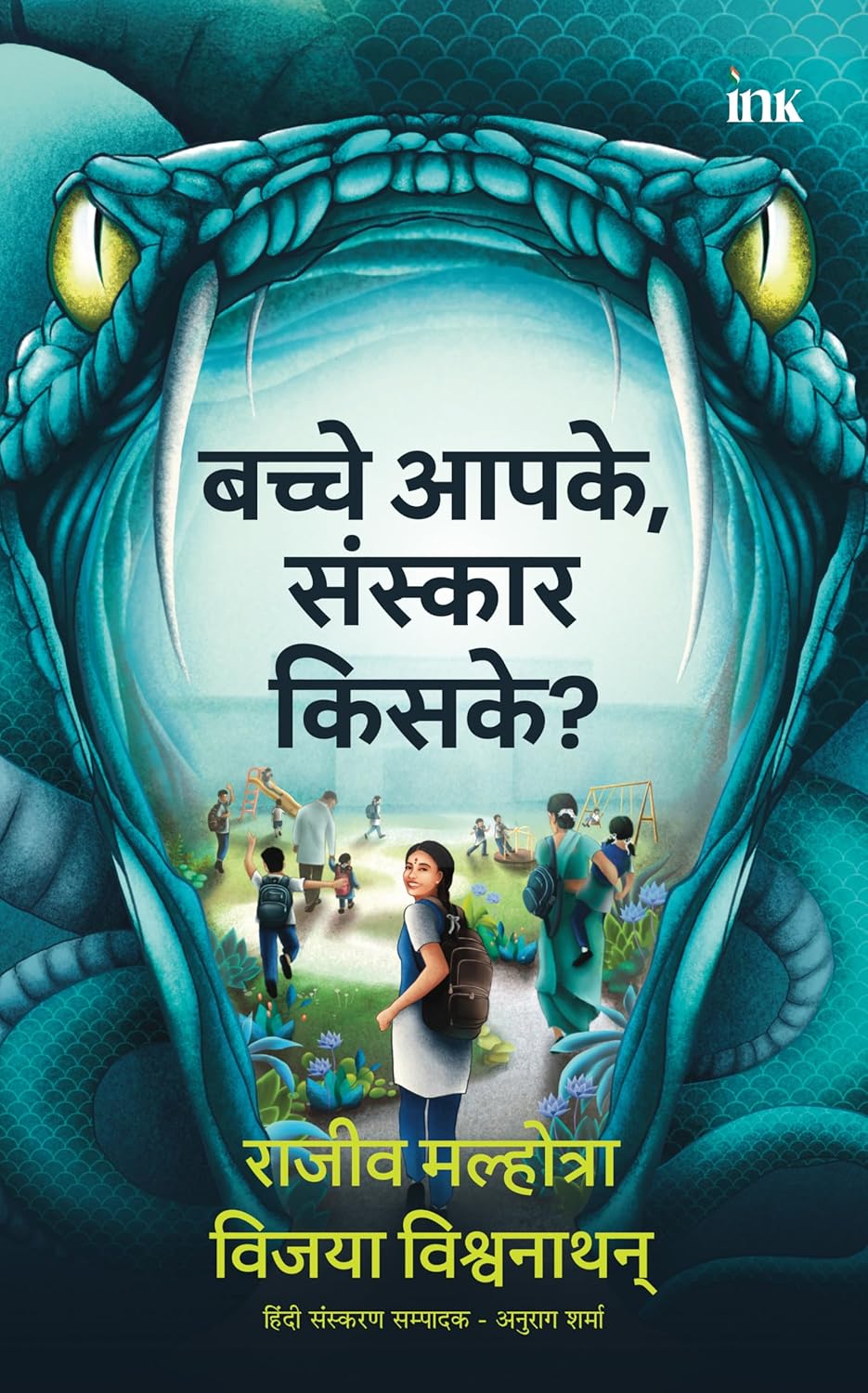
The cover page depicts the gigantic serpent Aghasura, described in the Bhagavata Purana. Aghasura is shown deceiving the children of Vrindavan by keeping his mouth wide open and making it appear like the entrance to an attractive cave. This metaphor is used to highlight the dangers allegedly hidden within Western educational models being imported into India, which are said to entice both parents and children alike.
Varna Jati Cast
Varna, Jati, Caste is an introductory exploration of India's traditional social structures by Rajiv Malhotra and Vijaya Viswanathan. The book examines the historical evolution of varna and jati, challenges common narratives surrounding caste, and presents an Indic perspective on social organization, diversity, and identity within Hindu civilization.
View Details →
Snakes in the Ganga
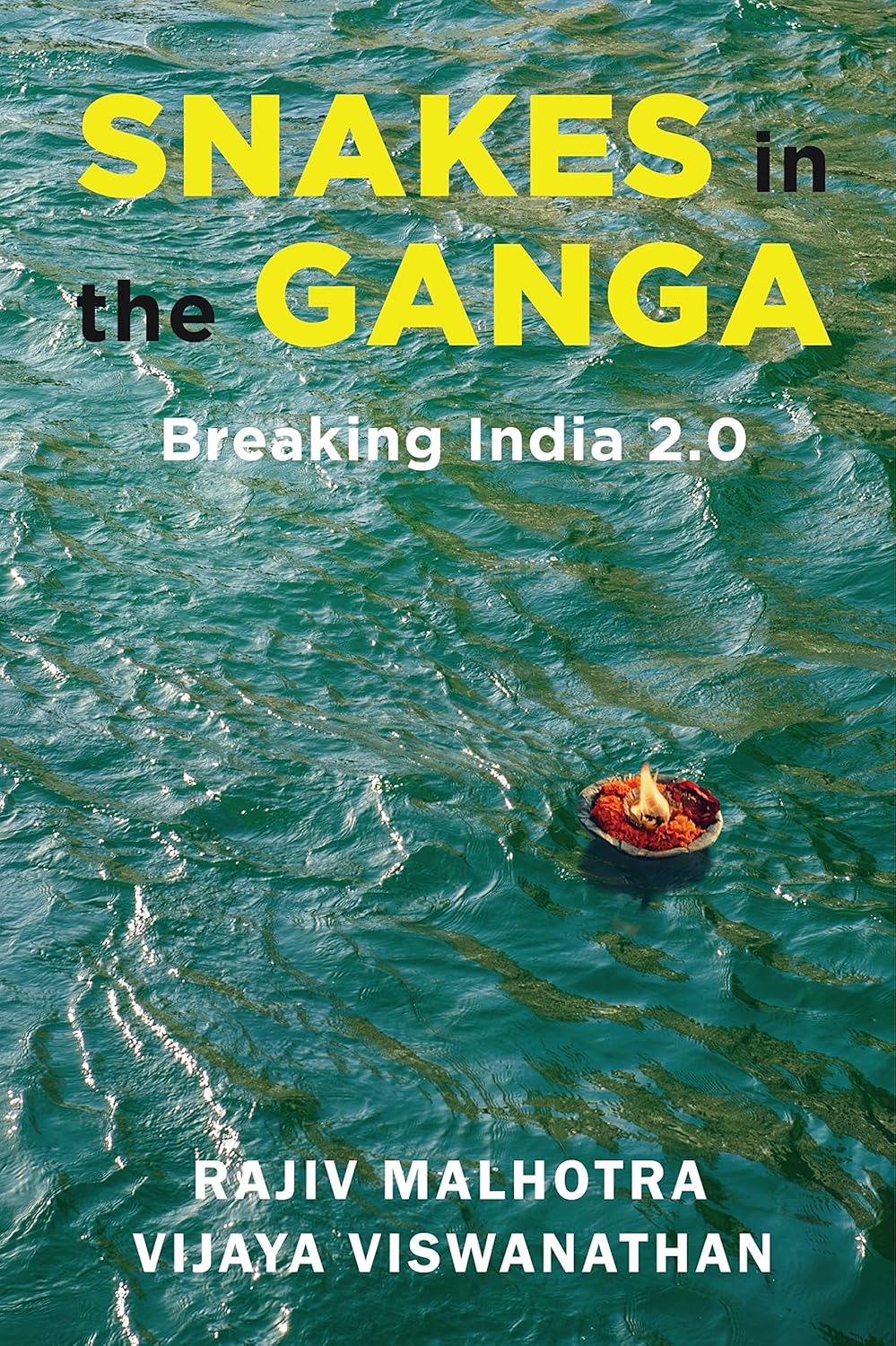
Snakes in the Ganga unveils uncomfortable truths concerning India's vulnerabilities: • Intense warfare against India's integrity is the work of a well-orchestrated global machinery driven by a new ideology. • Marxism has been reincarnated as Critical Race Theory in US academia and serves as the framework to address America's racism. This has been recklessly mapped on to India:Caste is equated with Race. Marginalized communities of India are considered as Blacks and Brahmins as the Whites of India. Groups claiming grievances (like Muslims and LGBTQ+) are artificially clubbed together. • Popularly called the Woke movement, the mission is to dismantle Indian civilization and heritage by waging an uncompromising war against India's government, educational institutions, culture, industry, and society. • Harvard University is Ground Zero of these social theories developed in collaboration with Indian scholars, activists, journalists and artists. This represents a clear and present danger to India's sovereignty and national security. • Several Indian elites are hoisting Harvard as the vishwa guru with their money and family names. Some private universities within India are importing Wokeism that has serious repercussions for India's stability. • Indian corporates are bringing the latest Western rubric of Environmental, Social, and Governance ratings into their workplace. This is aligned with the global Social Justice movement. • China has exploited this latest infrastructure as a passage to India. • Wokeism has penetrated some of the Indian government's policies. For instance, the National Education Policy 2020 is propagating Harvard's liberal arts. • An entire ecosystem of ideologies, institutions and young leaders is emerging for the recolonization of India. Is India for sale?
who is raising your children
The cover page depicts the gigantic serpent Aghasura, described in the Bhagavata Purana. Aghasura is shown deceiving the children of Vrindavan by keeping his mouth wide open and making it appear like the entrance to an attractive cave. This metaphor is used to highlight the dangers allegedly hidden within Western educational models being imported into India, which are said to entice both parents and children alike.
Contribute to preserving, publishing, and sharing Indic knowledge systems.
Help support research, conferences, and educational programs.
Donate Now
